PERSONALIZED CARE FOR GROWING BODIESPediatric Physical therapy
Helping kids build strength, improve movement, and gain confidence through personalized, one-on-one care.
Conejo Valley, CA - Mobile pediatric care that comes to you
Wilson, NC - In-clinic pediatric care
Pediatric physical therapy built around your child
Pediatric physical therapy helps build strength, mobility, balance, coordination, and confidence through care tailored to your child’s individual needs.
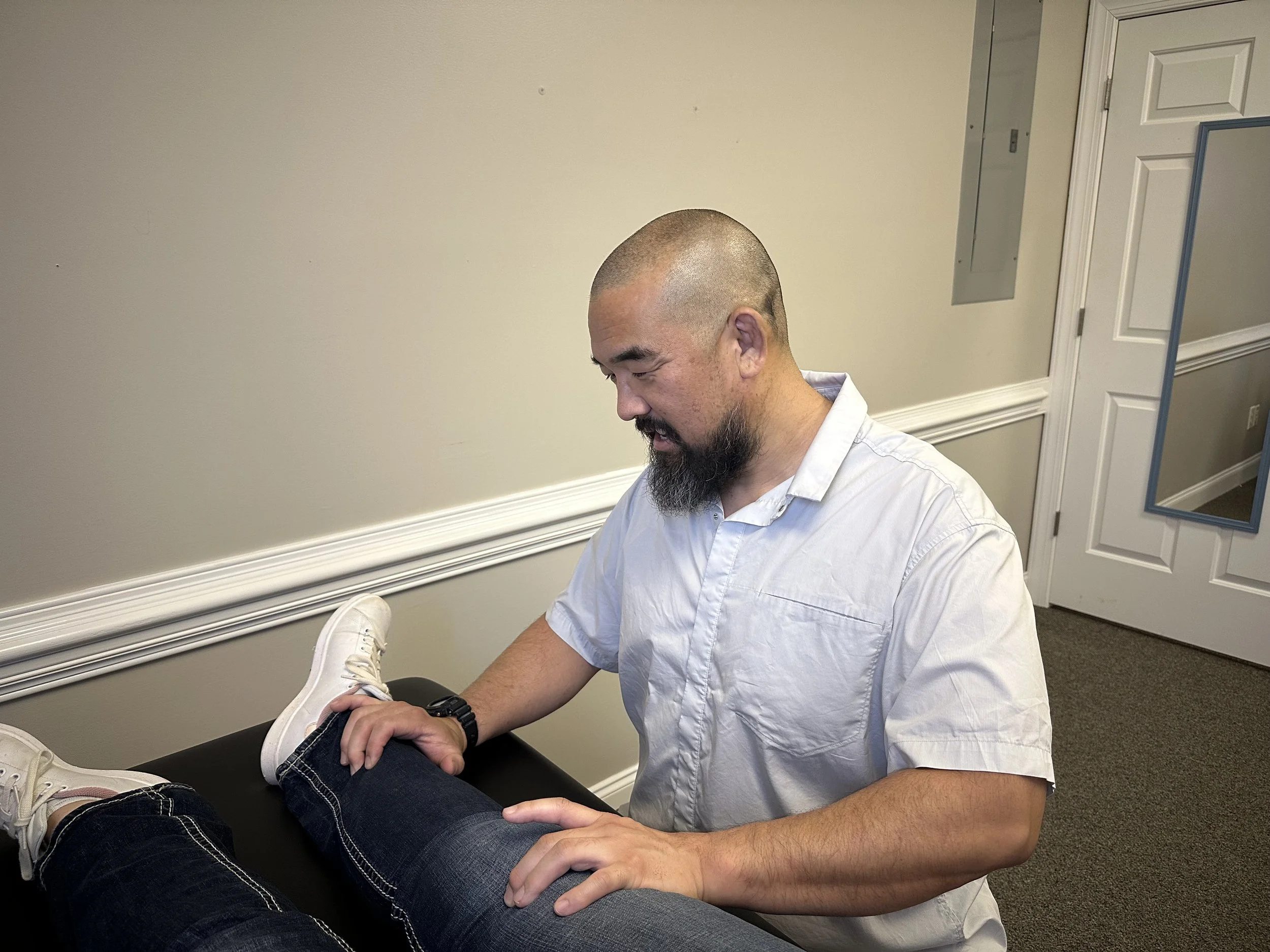
With more than 20 years of experience treating children, Galen combines hands-on therapy with movement to address the source of problems and help kids build lasting movement skills.
Pediatric conditions
-
Torticollis occurs when either the left or right sternocleidomastoid (SCM) muscles shorten. This causes a lateral tilt and opposite rotation of the head; there is a spectrum of severity with some babies will only have the rotation or tilt without the other. If you are looking at your pictures of your baby and if you see they are often looking the same direction, you might want to get your infant evaluated. Torticollis is easily treated with gentle manual therapy and exercises. It is better and easier treated earlier than later. If left untreated it can lead to significant developmental delays, however if treated correctly can be resolved with no further impact to their development.
Plagiocephaly occurs when an infant has torticollis and tends to sleep on the side direction their neck is rotated. This causes a flattening of the head and if treated early can be reversed. An easy check is next time you get her/his hair wet, and look down on her/his head. If there is flattening on the side especially behind one ear, this may be the start of plagiocephaly.
As with all medical challenges, please contact your pediatrician for a consultation.
-
Toe walking can occur for a variety of reasons. It can be neurological, due to ankle/foot structural malformations, or to meet sensory needs. A thorough history of when/what circumstances your child walks on her/his toes as well as a physical examination are important first steps to helping solve this challenge. Commonly, the problem is multiple sources and all need to be carefully addressed to help resolve this issue.
As with all medical challenges, please contact your pediatrician for a consultation.
-
Delay in gross motor (fine motor delays require the services of an occupational therapist) milestones can be from a variety of sources. The challenge with motor milestones is that they build upon the previous skill; when a patient uses compensations it disrupts the flow from one milestone to another. Getting kids back into the normal flow of development is an integral part of a pediatric physical therapists (PT) job.
Developmental Coordination Disorder describes a condition where a child has the inability to use their neurological system to fire the muscles needed for motor milestones such as sitting, crawling, or walking.
Both of these challenges can be addressed with exercises and manual therapy techniques to help the affected child learn how to control her/his body correctly.
As with all medical challenges, please contact your pediatrician for a consultation.
-
Hypotonia refers to a condition where the brain/spinal cord’s messages are not being delivered properly to the target muscles. Human movement tasks such as crawling or walking are complex and require pinpoint timing and precise amounts of force for a large number of muscles throughout the body at the same time. This junction of timing and force of muscles are what we refer to as coordination. Children with hypotonia will present with delayed or poor coordination and almost always demonstrate delays in their gross motor landmarks. PT is essential as early as possible to help children keep on their developmental milestones and learn to sequence their muscles correctly.
-
Sensory Processing is an area usually treated by occupational therapists (OT.) There are two big exceptions where PT is indicated. First is toe walking (please see above.) Second is for proprioception (body awareness) challenges. Proprioception is 1/3 input to balance systems and needs to worked in conjunction with OT to help correct the balance dysfunction that accompanies sensory processing challenges with the this system.
-
Rehab that a child might need rehab from a PT generally fall under three categories. First, a surgery involving injury/reconstruction of a joint/bone/muscle attachment. Second, a surgery impacting the nervous system. Third management of a scar that is affecting their ability to move. By far the first two are the most common. In order to begin therapy after a surgery a prescription from your child’s surgeon clearing them for therapy is required. If therapy is not an option brought up by your child’s surgeon/medical team, but you feel that the effects of surgery are impairing your child’s ability to move and explore his/her environment you can request an evaluation from you doctor to see if the challenge can be assisted by a PT.
-
Injuries to kids and teens don’t just happen to bones and joints, they impact developing neurological systems. In the cases of teens and younger children this is an important factor to address before you put them back on the field to engage in the sports they enjoy. If your child or teen has had repeated injuries to the same joint/muscles this can indicate a faulty movement pattern/body structure that has developed either before and as a result of such injuries which need to be address by a PT so your child can return to play.
As with all medical challenges, please contact your pediatrician for a consultation.
From newborns to teen athletes, Galen's pediatric work focuses on finding the root cause of movement challenges and building a clear path forward.
As with all medical challenges, please contact your pediatrician for a consultation.
Ready to get your child moving?
Start your journey toward kinetic restoration with a personalized consultation.